
Jack Stewart Clegg
Newtown High School of Performing Arts
CATCHING THE BIG FISH
Time-Based Forms
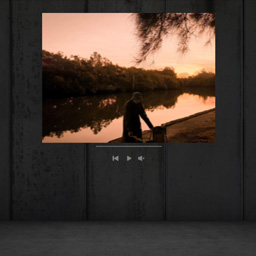
My intention in my body of work was to draw a parallel between the transition from silent movies to sound with contemporary anxieties surrounding AI and its threat to artistic practice. The filmmaker's and fisherman's characters contrast forced creation with patient discovery: the filmmaker's reliance on a machine conveys the dangers of reducing art to mechanical production, while the fisherman's character communicates a slower, organic process of waiting. The fish represents creativity itself - elusive, only caught through perseverance. My work investigates the destructive consequences of artificial shortcuts while affirming the value of patience, intuition and process in pursuing authentic inspiration.
My artmaking practice has been influenced by the study and interpretation of the following artists: David Lynch, Catching the Big Fish [book]; Salvador Dali; Zdzisław Beksiński; music from The Jazz Singer (1927) (dir.) Alan Crosland.
Marker's Commentary
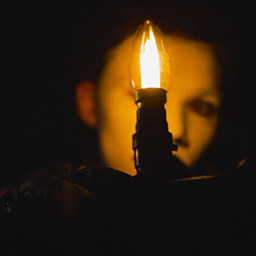
Catching the Big Fish is a meta-commentary on filmmaking and creativity. The time-based work begins with silent movie characters lamenting the advent of new technology, the “talkies”, which threaten to supersede them. This is intercut with parallel scenes of a lone fisherman patiently waiting on the bank of a river for a fish to bite. The metaphor of the fish as creative inspiration is revealed through the silent film character gently holding the fish in their hands before it slips away. This sophisticated work knowingly echoes the cinematic language of David Lynch’s surrealist films and early silent movies. Subtle visual details, including the interplay of black and white and colour, the sepia-toned fisherman scenes, ‘Twin Peaks-esque’ backwards-talking dialogue, lingering shots, and dropout audio, combine to build a sophisticated, layered film that invites patience and repeated viewing.