
Isaac Trinh
Sydney Grammar School
IN THE BEGINNING, IT WAS ALL BLACK AND WHITE
Sculpture
Air-dry paperclay, acrylic, found busts
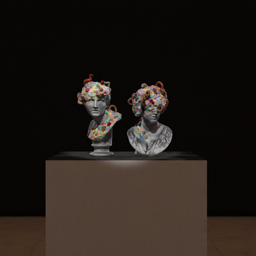
My body of work investigates the complex nature of gender dynamics. My intention in using colourful confectionery to disrupt highly idealised male and female sculptural forms (Alexander the Great and Bernini's Costanza) was to dismantle the binary construction of gender. I sculpted each dessert piece by hand, including individually rolled out sprinkles, and textured and glazed with varnishes and paint to achieve finishes that convey the rough surfaces of biscuits or icing on doughnuts. I attached the desserts to the busts with Liquid Nails adhesive and piped modelling paste around the seams to represent frosting.
My artmaking practice is influenced by the study and interpretation of the following artists: Ebony Russell, Yinka Shonibare.
Marker's Commentary
This work demonstrates a sustained and coherent articulation of ideas through its deliberate disruption of idealised classical representations of the male and female body. By combining artworld references to the depiction of Alexander the Great and Bernini’s Bust of Costanza Bonarelli with playful, brightly coloured confectionery forms, the work elaborates on the constructed nature of gender and challenges the stability of binary identity.
Meaning registers on several levels, as a critique of idealised gender representation, a subversion of authority and tradition, and a reflection on the artificiality of social expectations. These ideas are reiterated through the repeated placement of hand-modelled dessert forms across the busts, creating a subtle but sustained visual language. The work also displays technical sensitivity and refinement through the controlled manipulation of materials, including individually formed sprinkles, inviting colour choices, textured surfaces, varnish, paint, modelling paste and adhesive. These technical decisions show discrimination and moderation, remaining respectful of the selected materials and their limitations while strengthening the relationship between concept, form and surface.