
Abby Teuma
Colo High School
PUT DOWN, PASSED ON
Ceramics
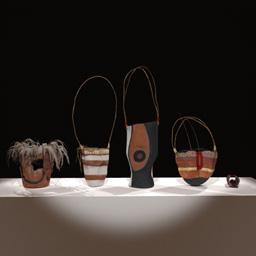
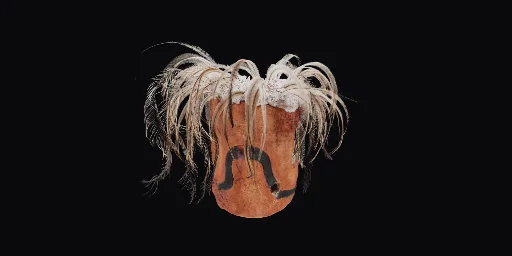
Raku clay, mixed glaze and oxide, crackle / lava glaze, natural fibres (crocosmia plant, cedar leaf stem), raffia, hessian, emu feathers
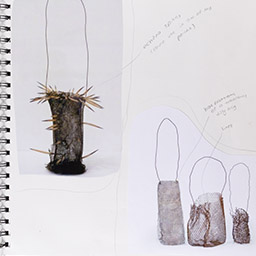
Women's business, especially as a young woman, is central to my body of work. This work represents not only my personal strength but also the collective resilience of Indigenous women. Traditionally, dilly bags were made by Indigenous women during yarning circles, where stories were shared and family bonds deepened. In making dilly bag forms in clay I draw on the natural textures and contours of the land. By working with clay - a strong, enduring material - in place of the softer fibres traditionally used, I convey the enduring strength of women and culture.
My artmaking practice is influenced by the study and interpretation of the following artists: Justine Wellman, Blood Blossom, Ground up [exhibition]; Rosalie Gascoigne / Lorraine Connelly-Northey [collaboration]; Lorraine Connelly-Northey, Kooliman, Possum skin cloak: Blackfella road, String Bag; Tiarna Herczeg, Wuljajiku (Forever), Airspace.
Marker's Commentary
Put Down, Passed On showcases a sophisticated understanding of ceramic practices and a highly refined use of natural objects to explore the significance of women’s business and the transmission of cultural knowledge. Drawing inspiration from Aboriginal women’s traditions, such as crafting dilly bags and coolamons, the work celebrates storytelling, kinship, and the strength of culture. The artist creates a series of hand-built ceramic forms that reinterpret the dilly bag and coolamon as both functional objects and significant symbolic vessels for memory, knowledge, and connection.
The intricate textured surfaces and organic shapes evoke the contours of Country, while clay’s transformative qualities bring permanence and resilience to objects usually woven from ephemeral materials. Incorporating natural elements enhances the tactile and conceptual depth of each piece, highlighting the harmony between form, material, and meaning. Individually distinctive yet unified, the collection represents personal identity and collective experience. Discerning, sophisticated material choices and a clear conceptual approach honour the knowledge passed between generations and the enduring role of Indigenous women as custodians of culture.