
Wilhelmina Crookes
Ascham School
HOUSEHOLD MYTHS
Photomedia
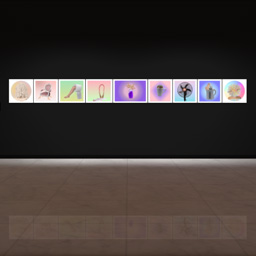
My body of work examines the intimate tension between body and object, representing limbs merging with domestic items to form unsettling hybrids. My intention in this work was to blur the familiar and unfamiliar and convey how identity is shaped by the mundane. Through this interplay, I communicate absence and presence, inviting the audience to reflect on how we project ourselves onto everyday things and how they shape us in return.
My artmaking practice has been influenced by the study and interpretation of the following artists: Irving Penn, Alex Contreras, Anna Bu Kliewer, Cindy Sherman, Gerwyn Davies. Minor use of Photoshop AI Generative Fill to clean up small details on the hands in purple bottle (image 5) as well as fixing small details on the straw head (image 9).
Marker's Commentary
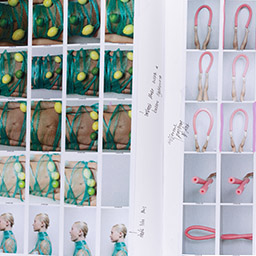
This body of work traverses the genres of portraiture and still life through contemporary Photomedia. The work is a series of intentional, whimsical digital photographs that displace the context of two forms: man-made objects and the human figure. Techniques such as digital compositing, photomontage, and editing are used to merge disparate elements into a single frame, creating convincing yet surreal hybrids. Studio lighting enhances the uncanny quality of the images. A gentle gradient is used as a motif in the background of all images to synthesise the various body parts and static objects, denoting the blurring between the two. It also extends the strange relationships between objects and forms, dislocating them from time and place. The first and last vignetted portraits suggest that these body parts belong to a single human figure, establishing a narrative. Humour is reinforced through the unusual compositions, exaggerated scale, and unexpected juxtapositions.
The practice of the artist Maurizio Cattelan is evident in the contemporary, photographic collage-like compositions that provoke unlikely connections between familiar elements. Techniques such as careful staging, high-resolution camera work, and post-production manipulation contribute to the hyperreal resolution of the works. The concept of the personification of objects, or their imagined life, is sustained through the range of arrangements between inanimate and animate forms. The viewer is presented with a hybrid human, prompting questions about our connection to and identification with our roles and relationships.