
Teagan Rundle
Singleton High School
LIFE'S IMPERMANENCE
Painting
Acrylic on canvas
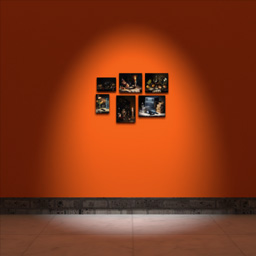
My body of work is a series of paintings inspired by 17th century Dutch still-life paintings and Sam Leach's practice of using AI to generate compositions that are then painted in a traditional manner. In the period known as the Dutch Golden Age, paintings featuring the material richness of everyday life were popular. They illustrated the society of the time as being filled with lavish flowers and luxury goods, but the compositions carried deeper symbolic meanings. Life's Impermanence represents items traditionally seen in those works then progresses slowly to items that are more contemporary and familiar to modern day society.
My artmaking practice is influenced by the study and interpretation of the following artists: Sam Leach, Clara Peeters, Maria van Oosterwijck, Willem Kalf.
Marker's Commentary
Life’s Impermanence is an accomplished and conceptually cohesive body of work that reinterprets the traditions of 17th-century Dutch vanitas painting through a contemporary lens. Across six sensitively rendered acrylic paintings, the body of work investigates enduring themes of mortality, transience and the fragility of human existence. Drawing upon the visual language of the Dutch Golden Age, the series incorporates universally recognisable memento mori symbols including candles, flowers, fruit, timepieces and decaying objects. These traditional reminders of life’s brevity are progressively juxtaposed with contemporary artefacts such as a mobile phone, disposable plastics, paper cups, soft drink cans and torches. Through this subtle transition, the series extends beyond historical reference to become a cultural commentary on modern consumerism, environmental concerns and the fleeting nature of contemporary lifestyles. The carefully curated arrangements encourage audiences to reflect on what is valued in society and how material possessions, regardless of era, remain subject to inevitable decline.
The series demonstrates a highly informed understanding of still-life conventions and contemporary approaches to appropriation and reinterpretation. Dramatic chiaroscuro lighting, a restrained Baroque palette and intimate scale create a contemplative atmosphere that reinforces the viewer’s meditation on mortality. Technical resolution is consistently sophisticated throughout the series. The student’s practice displays exceptional control of acrylic paint through the sensitive modelling of form, nuanced tonal transitions and convincing depiction of surface qualities, from reflective metalware and glass to folded fabric, fruit, flowers and contemporary manufactured objects. The recurring visual language unifies the body of work while allowing meanings to unfold across multiple levels. Conceptually sustained and technically refined, Life’s Impermanence successfully bridges historical and contemporary worlds, offering a thoughtful reflection on the enduring relevance of vanitas imagery in today’s society.