
Will Putt
Macarthur Anglican School
THEY HAIL FROM SNOWY RIVER, UP BY KOSCIUSKO'S SIDE. THEIR HOOFS STRIKE ...
Ceramics
Stoneware clay, naked horsehair raku
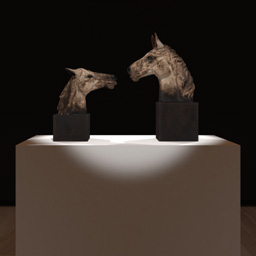
In my body of work two ceramic heads represent freedom, endurance and untamed spirit, paying homage to the brumbies of the Snowy Mountains as immortalised in The Man from Snowy River. Through the raku firing process and delicate burning of horsehair into the surface, my intention was for the sculptures' charcoal marks and seared lines to bind fire, earth and animal into one form, conveying a physical and symbolic connection between the animals and the land they inhabit. My work acknowledges the ongoing tension between conservation and culling, illustrating how these creatures remain woven into Australia's cultural and environmental identity.
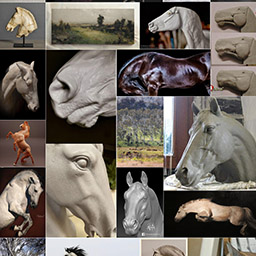
My artmaking practice has been influenced by the study and interpretation of the following artists: Banjo Paterson The Man from Snowy River; Celia Allen; Ostinelli & Priest; Beth Cavener; JenSol Photography; Ewa Jaworska.
Marker's Commentary
This body of work draws our attention to the plight of the Brumbies in the NSW Snowy Mountains through two ceramic sculptures representing the bust of the horses. The appearance of the horses convey pride, restrained strength, sophistication, and a quiet authority. The physical scale varies, one of the horses is mature while the other appears younger, possibly a colt or a filly. The body of work is presented and elevated on two plinths, a nod to curatorial gallery display. With sustained ceramic modelling throughout, their facial expressions also note their sense of independence.
Rather than representing obvious details such as the coat with conventional hair patterning, the surface of the clay is expertly handled with a unique process of burning hair into the ceramic surface. This transformative process of surface infusing has created distinctive ‘earthy’ mark making which reflects the country and terrain in which the horses inhabit, much like an artist’s mapped drawing. This extends to the mane, modelled in a more conventional free-flowing manner. With the considered handling of clay, these markings bind the cultural connection to the land, while the body of work successfully moves the audience to consider the tension and realism of environmental preservation and the ongoing social history of the Brumby.