
Srimahi Paravastu
Willoughby Girls High School
THE NUCLEAR FAMILY
Ceramics
Terracotta clay with glaze
The concept of a 'surveillance state' may seem dystopian and irrelevant in the 21st century, yet it is a reality we inhabit due to late-stage capitalism. In my body of work I examine how covert surveillance is integrated into modern society through the internet and, increasingly, AI. My work references propaganda with the intention of highlighting the oppressive nature of surveillance capitalism and confronting audiences with historical parallels of authoritarian monitoring, now repackaged through digital platforms. I encourage audiences to reflect on the systems we participate in, often unknowingly, and the exploitation embedded in our digital interactions.
My artmaking practice has been influenced by the study and interpretation of the following artists: Shoshanna Zuboff, The Age of Surveillance Capitalism [book]; Grayson Perry; Amanda Shelsher; Hito Steyerl.
Marker's Commentary
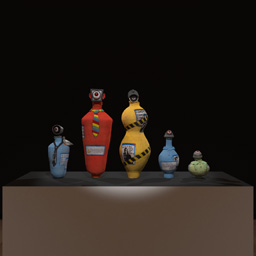
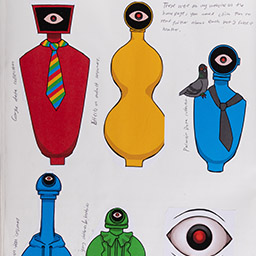
The ceramic sculptures in the body of work titled Nuclear Family uses hand-built vessel forms to represent members of a family shaped by technology and surveillance culture. Techniques such as coiling and slab construction have been combined with sculptural modelling to create exaggerated forms and single-eye motifs that resemble cameras and digital devices. The textured ceramic surfaces and layered glazes give the works a rough, handmade appearance, contrasting with the cold and invasive nature of technology. Colour symbolism plays an important role in communicating meaning in this body of work. The bright red figure suggests authority, danger and control, while the yellow form references warning signs and caution through the use of black hazard stripes. The blue figures appear quieter and more vulnerable, symbolising ordinary people being monitored in everyday life. Next to the larger forms, they read as the younger generation. The small green vessel alludes to a fresh or new life, not as affected yet by technology, and it is made with more organic, leaf-like shapes. Its eye is also bloodshot, suggesting that even the very young are looking at screens. Small painted images, text fragments and graphic symbols imitate social media, surveillance screens and online advertisements, reinforcing the connection to digital culture.
The artwork reflects Postmodern ideas through appropriation, satire and social commentary. By combining human forms with technological imagery, the artist critiques the increasing presence of surveillance in contemporary society and questions how technology affects relationships within families. The oversized “eyes” suggest that parents, children and even toddlers are constantly watched through phones, cameras and online platforms. Additionally, the eyes are bloodshot, perhaps suggesting that too much screen time is physically detrimental to humans. The body of work encourages audiences to consider issues of privacy, data collection and the growing dependence on technology in modern life.