
Tash Beckett
St Paul's College
WALLANDOOL
Documented Forms
Projected archival imagery, photography
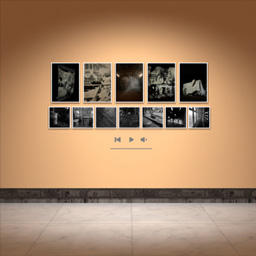
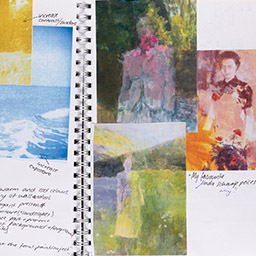
Wallandool examines my family property and its long and intriguing history from the 1880s. My intention was to represent the memory of this place: its forgotten past, its remnants, and the traces of absence that linger across the landscape. Photographs from both the past and the present convey how memory endures and how remnants of history shape the lived experience of the site. Inspired by Linda Schwab, who layers imagery to evoke a dreamlike, nostalgic reality where subjects emerge and dissolve, my body of work communicates the living memory of Wallandool, a space where the past continues to speak.
My artmaking practice has been influenced by the study and interpretation of the following artists: Trent Parke, Hiroshi Sugimoto, Duane Michals, Stanislava Pinchuk, Linda Schwab, Tony Oursler.

Marker's Commentary
Wallandool is a series of intricately detailed photographic works with an integrated soundscape within Documented Forms. The work demonstrates a highly sophisticated and resolved engagement with photographic and installation practice, revealing a deep conceptual understanding of contemporary art making practice, place, memory and absence on representing the artists' family sheep farming property. Through the exploration of Wallandool, the artist successfully transforms personal history into a broader reflection on rural Australian experience, using photography to bridge temporal shifts between past and present. The integration of black and white and sepia imagery reinforces a sense of nostalgia and historical continuity, while the inclusion of soundscape extends the work into a multi-sensory and immersive experience.
The interweaving of archival materials with contemporary documentation is handled with sensitivity and control, allowing traces of labour, particularly in the soundscape, environment and absence to emerge poetically rather than literally. The sophistication of photographic technique is clearly evident across all works and enhanced further by the soundscape. The influence of Linda Schwab is evident in the layered and evocative treatment of imagery, demonstrating an ability to translate painterly concerns into atmospheric photographic language. The work sustains a cohesive and compelling visual narrative, engaging the audience conceptually and emotionally. Overall, it represents a confident, articulate, and highly accomplished understanding of practice.